AI is reshaping last-mile delivery as rising transportation costs, growing e-commerce volumes, and higher customer expectations put more pressure on logistics operations.
For enterprise shippers, retailers, couriers, and 3PLs, managing thousands of deliveries, complex routes, multiple fleets, and real-time disruptions requires more than traditional planning tools. AI-powered delivery software
In this blog, we’ll look at the top AI-powered courier and last-mile delivery software for 2026 , along with the key capabilities and considerations supply chain and logistics leaders should evaluate when choosing a solution.
For enterprise logistics operations, AI is becoming less of a “nice-to-have” and more of a strategic advantage. It can help organizations optimize costs, improve delivery performance, and make faster decisions across complex delivery networks.
Key benefits include:
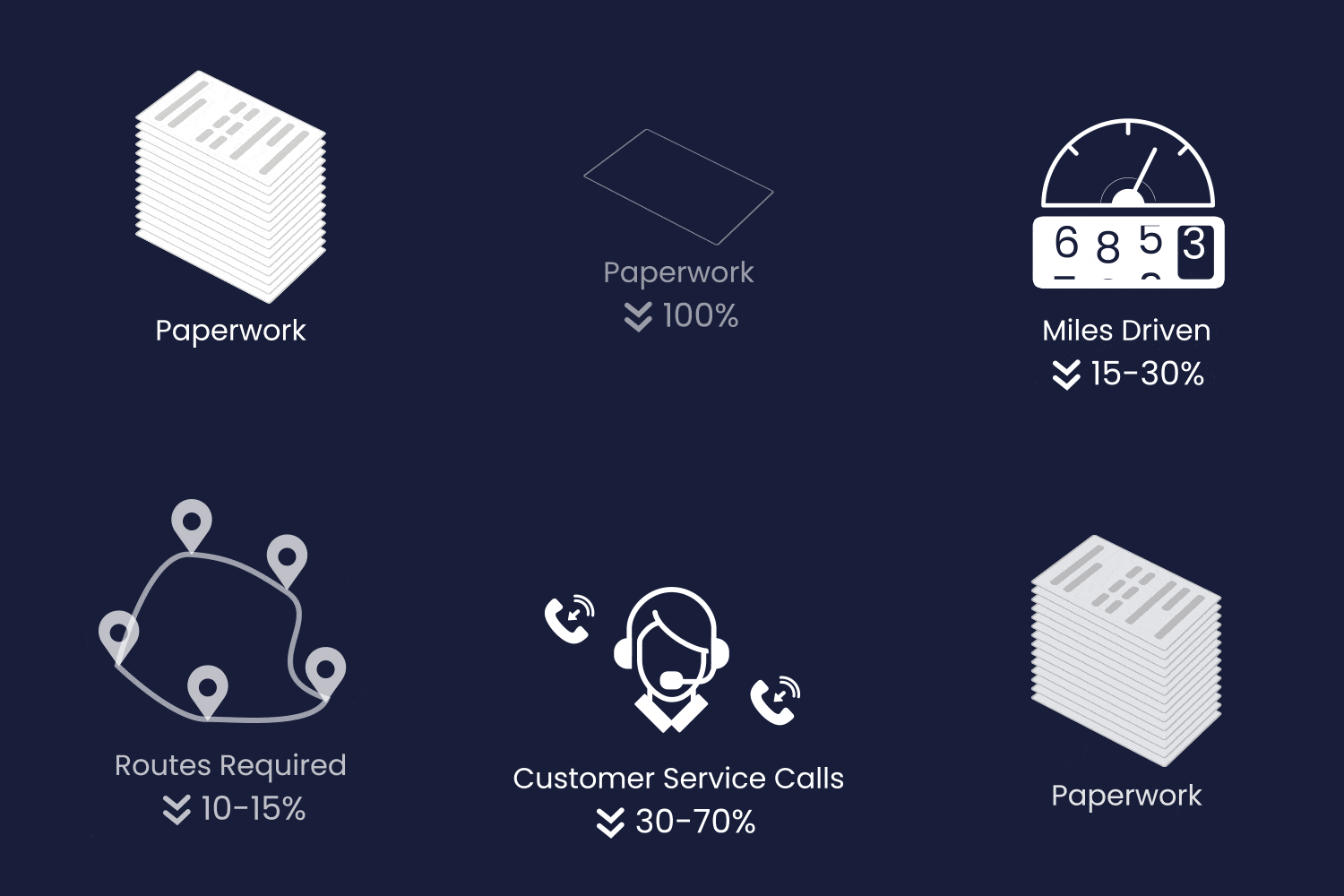
Lower delivery costs: AI-driven optimization can help reduce last-mile logistics costs by 20–40% through smarter routing, fleet utilization, and resource allocation.Faster deliveries: Intelligent route planning and real-time optimization can improve delivery times by up to 22% .Fewer delays: Predictive AI can identify potential disruptions and enable proactive adjustments, helping reduce delivery delays by 14–30% .Greater delivery accuracy: Smart tracking and automated visibility can drive delivery accuracy to nearly 99.9% .Better customer experience: Real-time updates and more reliable delivery windows can improve customer satisfaction by 18–25% while supporting 95%+ on-time delivery rates .
For supply chain leaders, the bigger opportunity is connecting these improvements across the entire last-mile operation—not optimizing individual deliveries in isolation.
Not all AI-powered delivery platforms
Here are the key capabilities to evaluate:
AI should consider multiple constraints—including delivery windows, vehicle capacity
Routes shouldn’t be fixed once the day begins. AI can continuously adapt to traffic, weather, vehicle breakdowns, and last-minute order changes.
Automated dispatch can match orders with the right vehicles and drivers, sequence stops, and reduce the manual workload for operations teams.
A centralized view of drivers, vehicles, routes, and delivery milestones gives dispatchers and supply chain leaders
AI-powered ETAs use traffic, historical performance, stop durations, and real-time conditions to provide more accurate and continuously updated arrival times.
Instead of reacting after a delivery fails, AI can identify potential delays, missed stops, or other exceptions early and help teams take corrective action.
Digital signatures, photos, barcode scans
Natural-language AI assistants can help operations teams quickly identify delays, risks, and performance issues and surface actionable insights.
Enterprise delivery software should integrate with core systems such as ERP, WMS, and TMS through APIs and modern integration frameworks, allowing organizations to improve last-mile operations without replacing their existing technology stack.
Choosing the right last-mile delivery platform
nuVizz is an enterprise-grade Last Mile TMS designed to help shippers, carriers, distributors, retailers, and 3PLs plan, execute, and optimize complex delivery networks.
Its AI and machine learning capabilities support dynamic route optimization
For enterprise operations, nuVizz goes beyond route planning by connecting planning, execution, visibility, carrier and partner orchestration, proof of delivery, analytics, and billing within a unified platform. Its network-based architecture also supports visibility across multiple facilities, carriers, hubs, and delivery touchpoints.
Best suited for: Enterprises managing high-volume, multi-location, multi-carrier, or operationally complex last-mile delivery networks.
OptimoRoute is a route planning
Best suited for: Organizations looking for dedicated route planning and delivery optimization capabilities.
Tookan is a delivery management platform
Best suited for: Businesses managing on-demand delivery and field service operations.
Routific provides route optimization
Best suited for: Small and growing delivery operations looking to improve route planning and fleet efficiency.
Track-POD focuses on delivery management, real-time tracking
Best suited for: Businesses prioritizing digital proof of delivery, tracking, and delivery execution.
The best platform ultimately depends on your operational scale and business requirements. Enterprises should look beyond basic route optimization
For organizations managing complex last-mile networks, a platform such as nuVizz can provide a broader foundation for delivery orchestration—not just route optimization.
Disclaimer: Information is based on publicly available data at the time of writing. Please verify current features and pricing with providers before making a decision.
nuVizz goes beyond basic route optimization to help enterprises plan, execute, monitor, and optimize last-mile operations from a unified platform.
Key capabilities include:
Unified Last-Mile TMS: Combines transportation management and last-mile orchestration to manage complex delivery operations at scale.AI-Powered Optimization: Uses AI and machine learning to improve route planning, dispatch, resource utilization, and operational decision-making.Predictive Visibility: Helps teams identify potential delays, improve ETA accuracy, and respond to delivery exceptions proactively.End-to-End Delivery Visibility: Provides real-time visibility across orders, drivers, vehicles, routes, and delivery milestones.Digital Delivery Execution: Mobile workflows and electronic proof of delivery help eliminate manual processes and improve delivery accuracy.Multi-Carrier Orchestration: Enables enterprises to coordinate internal fleets, third-party carriers, and delivery partners through a centralized platform.Flexible Enterprise Workflows: Supports complex delivery requirements across industries, allowing organizations to configure workflows around their operational and compliance needs.
Together, these capabilities make nuVizz more than a route planning tool—it provides an enterprise platform for managing and optimizing the complete last-mile delivery lifecycle.
Streamline complex transportation networks with greater visibility, automation, and control. Explore Enterprise TMS
An automotive
The organization implemented nuVizz Last Mile TMS
AI-driven route optimization using delivery constraints, vehicle capacity, and real-time conditions.Granular shipment and asset tracking from origin through dealership delivery.Mobile ePOD workflows for digital delivery confirmation, photos, and exception reporting.Real-time tracking links and notifications to improve dealership visibility.
Results
The implementation delivered measurable improvements across the delivery network:
25% improvement in delivery efficiency 20% reduction in fuel consumption 98%+ on-time delivery rate 30% faster settlement cycles
The results demonstrate how an AI-enabled last-mile platform
Performance Metric Traditional / Fragmented Network Orchestrated nuVizz Network On-Time Delivery (OTD) Inconsistent performance 96%–98.5%+ OTD Fuel & Operating Costs Higher costs from static routing and empty miles 20%–25% reduction in fuel use Overall Operating Costs Higher administrative and dispatch overhead 30%–35% reduction in driver hours and miles Settlement & Billing Cycles Slow, paper-dependent reconciliation 30% faster through digital ePODMissed Deliveries More frequent manual errors Up to 70% reduction in missed delivery segments
The right last-mile delivery software
Smaller operations can prioritize easy-to-use route planning, driver apps
As delivery networks expand, look for fleet and capacity management, real-time traffic updates, multi-day planning, and stronger visibility. These capabilities help businesses increase driver productivity while maintaining service levels across growing regions.
Enterprise operations require more than route planning. Look for AI-driven optimization, automated dispatch, multi-fleet and multi-carrier management, real-time visibility
Don’t evaluate software based only on subscription or licensing costs. Consider the total cost of ownership (TCO), including integrations, implementation, training, support, and ongoing maintenance.
At the same time, evaluate potential ROI
Last-mile software should work with your existing technology ecosystem rather than create another data silo. Look for integrations with ERP, WMS, TMS, OMS, CRM, and e-commerce platforms, supported by APIs and real-time data exchange.
Your industry can also determine which capabilities matter most:
Healthcare & Pharmaceuticals: Compliance, chain of custody, temperature monitoring, and secure delivery workflows.Food & Beverage: Time-sensitive deliveries, perishables management, and temperature visibility.Retail & E-commerce: Customer communication, delivery tracking, flexible time windows, and reverse logistics.Automotive: High-frequency dealer deliveries, multi-leg routes, and granular tracking of totes, cages, and other handling units.
Selection Criteria Dedicated Route Planner Traditional TMS Last-Mile TMS / Orchestration Platform Best Fit Small fleets and straightforward delivery operations Enterprise transportation and freight management Mid-market to enterprise last-mile networks Optimization Basic route optimization Transportation and load optimization AI-driven, multi-constraint last-mile optimization Visibility Basic route/driver tracking Shipment and transportation visibility Real-time order, stop, driver, vehicle, and delivery visibility Execution Basic dispatch and driver workflows Primarily transportation-focused Dispatch, dynamic routing, ePOD, exceptions, and delivery execution Network Complexity Single or limited fleets Upstream and long-haul networks Multi-depot, multi-fleet, multi-carrier, and high-volume networks Integration Basic integrations ERP/WMS/TMS integrations API-driven integration across ERP, WMS, TMS, OMS, and carrier systems Enterprise Requirements Limited Strong for transportation management Designed for complex last-mile orchestration and scalable operations
For enterprise organizations, the key question isn’t simply “Which software has the most features?” It’s “Can this platform scale with our delivery network and help us continuously improve cost, service, and operational performance?”
AI is moving last-mile delivery from reactive operations toward predictive, automated, and increasingly autonomous decision-making. For enterprises, the next phase will be less about simply optimizing routes and more about continuously orchestrating the entire delivery network.
Key developments to watch include:
AI will take on more routine planning and dispatch decisions, allowing operations teams to focus on complex exceptions and strategic decisions.
Instead of reacting to delays, AI will identify potential SLA risks early and recommend or automatically initiate corrective actions.
Connected AI systems will help balance workloads across fleets, facilities, carriers, and regions to improve resource utilization across the network.
AI will enable more accurate ETAs, flexible delivery options, and personalized customer communications, helping improve first-attempt delivery success.
Future routing engines will increasingly consider fuel consumption, vehicle type, emissions, and other sustainability factors alongside cost and delivery time.
As automation and micro-fulfillment evolve, enterprises may increasingly combine human drivers with autonomous delivery technologies for specific use cases and environments.
The future of last-mile delivery isn’t simply more automation—it is smarter orchestration. Enterprises that connect AI with real-time data, operational workflows, and their broader supply chain technology stack will be better positioned to scale efficiently and respond to changing customer and market demands.
AI is reshaping last-mile delivery by helping enterprises reduce costs, optimize routes, improve visibility, automate decisions, and deliver better customer experiences. As delivery networks become more complex, choosing a platform that can scale across fleets, locations, carriers, and workflows becomes increasingly important.
The right last-mile technology should go beyond route planning to provide end-to-end orchestration, real-time visibility, intelligent optimization, and measurable operational value.
Ready to transform your last-mile operations? See how nuVizz can help optimize your delivery network—request a demo today .